
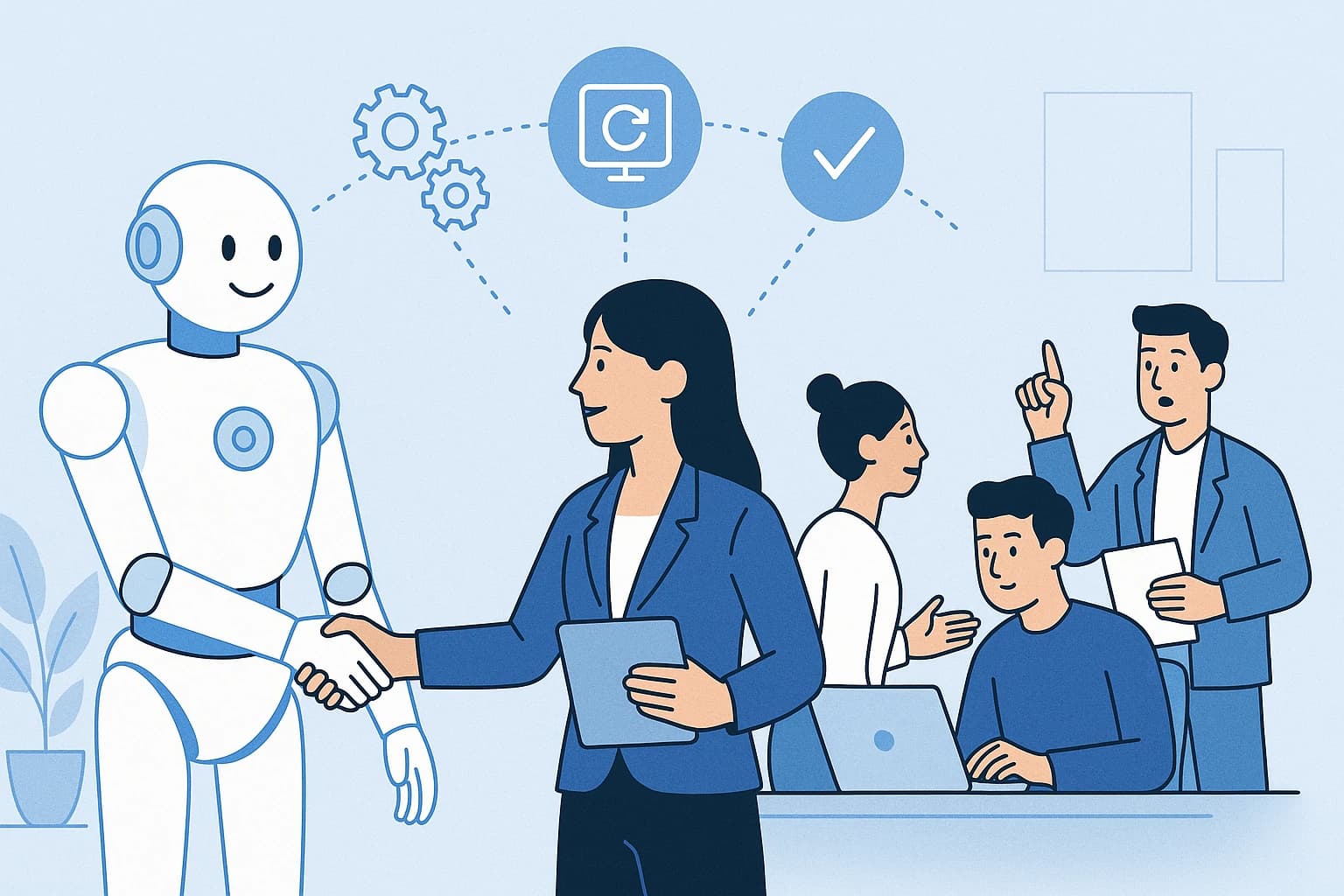
Automation Without Overhead: How to Integrate AI Agents Without Disrupting Your Team
By Dan Martuszewski
15/12/2025
The Automation Dilemma: More Help or More Hassle?
Sarah, a department head at a growing marketing firm, is staring at her team’s workload. Everyone is at capacity, juggling creative projects with a mountain of administrative tasks. She knows automation could help, but the thought of introducing a new software platform makes her anxious. Visions of weeks of training, painful data migration, and a clunky new interface that no one wants to use flash through her mind. It feels like adding another problem, not solving one.
This is the automation dilemma many leaders face. New technology is supposed to make our lives easier, so why does it so often feel like it just adds more work? The hidden costs are real: productivity lost to training sessions, integration projects that never quite work, and employee resistance to yet another change.
But what if you could get all the benefits of automation without the disruptive side effects? What if you could add a powerful new team member who already knows how to use your existing systems?
This is the promise of automation without overhead. This article will show you how to seamlessly integrate AI agents into your business operations, empowering your team and boosting productivity without the typical costs of new software implementation.
The Power of Seamless Integration: Work With What You Already Have
The secret to non-disruptive automation is simple: don't force your team to change how they work. Instead of introducing another complex platform, the goal is to enhance the tools they already use and love every day.
Your Existing Tools are the Cockpit
Think of the software your team uses - your CRM, email, and project management tools - as the cockpit of a plane. They are the pilots, and they know their controls inside and out. AgentsMountain.com agents don’t force them into a different plane. Instead, they act as a skilled co-pilot.
Our AI agents plug directly into the software your team already relies on, whether it's Salesforce, Gmail, Asana, QuickBooks, or others. We don't give you another dashboard to check or another password to remember. The agent simply gets a login, just like a new human employee, and gets to work in the background. The employee remains the pilot, fully in control, but now they have an intelligent assistant handling routine procedures, making them more effective.
The 'Zero Learning Curve' Advantage
This "co-pilot" approach has a powerful benefit: there is virtually no learning curve for your team.
- No training sessions: Your employees don't need to take time away from their work to learn a new system.
- No workflow changes: They continue to perform their jobs from the familiar environment of their primary tools.
The only difference they notice is that the tedious parts of their job are suddenly done for them. For example, a salesperson finishes a client call and, moments later, sees the notes, contact updates, and follow-up tasks have been automatically logged in the CRM. They didn't have to do anything new; the work just got done. Similarly, an accountant doesn’t need to learn a new invoicing platform; they simply find that incoming invoices are already sorted, verified, and waiting for final approval in their existing accounting software.
Augmentation, Not Replacement: Making Your Team Superhuman
One of the biggest fears surrounding AI is that it's here to replace people. Our philosophy is the opposite. AI agents are designed to augment your team, freeing them from low-value tasks so they can focus on the work that requires their unique human talents. It’s about making your employees more valuable, not redundant.
Freeing Up Your Team for High-Value Work
Think about the repetitive tasks that drain your team's energy and time. AI agents are perfect for taking over this kind of work across all business functions:
- For Sales Teams: Handling data entry into the CRM, qualifying new leads based on set criteria, and scheduling follow-up reminders.
- For HR Departments: Screening initial job applications against keywords, scheduling interviews with qualified candidates, and sending out standard onboarding documents.
- For Operations & Finance: Generating weekly performance reports, tracking inventory levels against sales data, and processing employee expense reports.
This isn't about taking away jobs; it's about giving your team back their time and brainpower. The hour your sales rep saves on data entry is an hour they can now spend building a stronger relationship with a key client.
Before and After: A Day in the Life
Let’s look at the tangible difference an AI agent can make for an account manager.
- Before the AI Agent: The manager starts her day spending 90 minutes sifting through hundreds of emails, manually updating the CRM with notes from yesterday, and building a to-do list. Her morning is a reactive, administrative slog.
- After the AI Agent: She arrives to find her CRM is already up-to-date. An email summary from the agent highlights the most urgent client conversations, and follow-up tasks are already scheduled in her calendar. She can dive straight into strategic work, solving client problems and closing deals.
The agent has transformed her role from reactive administrator to proactive strategist.
How to Get Started: A Simple Path to Smooth Implementation
Integrating an AI agent is a straightforward, low-risk process. You don't need a massive, company-wide overhaul. You just need to take one step at a time.
- Identify the Bottleneck: Start small. What is one repetitive, time-consuming task that frustrates your team? It could be as simple as copying data from an order form into your shipping software. This is your perfect starting point.
- Start with a Pilot Project: Assign that one task to an AI agent. This allows you to see a rapid return on investment and prove the concept to your team without any significant risk or disruption.
- Communicate the "Why": Be transparent with your employees. Frame the agent as a new resource designed to eliminate their most tedious work. The goal is to make their jobs better and more engaging, not to replace them.
- Gather Feedback and Scale: Once the pilot project is a success and your team feels the benefit, involve them in the next step. Ask them: "What’s the next bottleneck we should automate?" This collaborative approach ensures buy-in and builds momentum.
The Future of Work is Collaborative, Not Complicated
True efficiency doesn't come from adding more tools, more dashboards, and more complexity. It comes from making the people and tools you already have work smarter.
AI agents are the ultimate team players. They integrate seamlessly into your existing workflows, require no training from your staff, and take on the manual work that holds your business back. By augmenting your team's capabilities, you empower them to focus on what they do best: innovate, connect, and grow your business.